
Meet the chimpanzees of Kibale
Kibale National Park in western Uganda is a stronghold for chimpanzees, with an estimated 1,500 or more animals in at least 12 communities. Visitors meet them on guided walks from the Kanyanchu visitor centre, and our guide to chimpanzee trekking in Kibale explains the day step by step.
This page is about the animals themselves: what they are, how they live together and what researchers have learned in the forest. It also tells you what a visit looks like, so you know what to expect before you book.
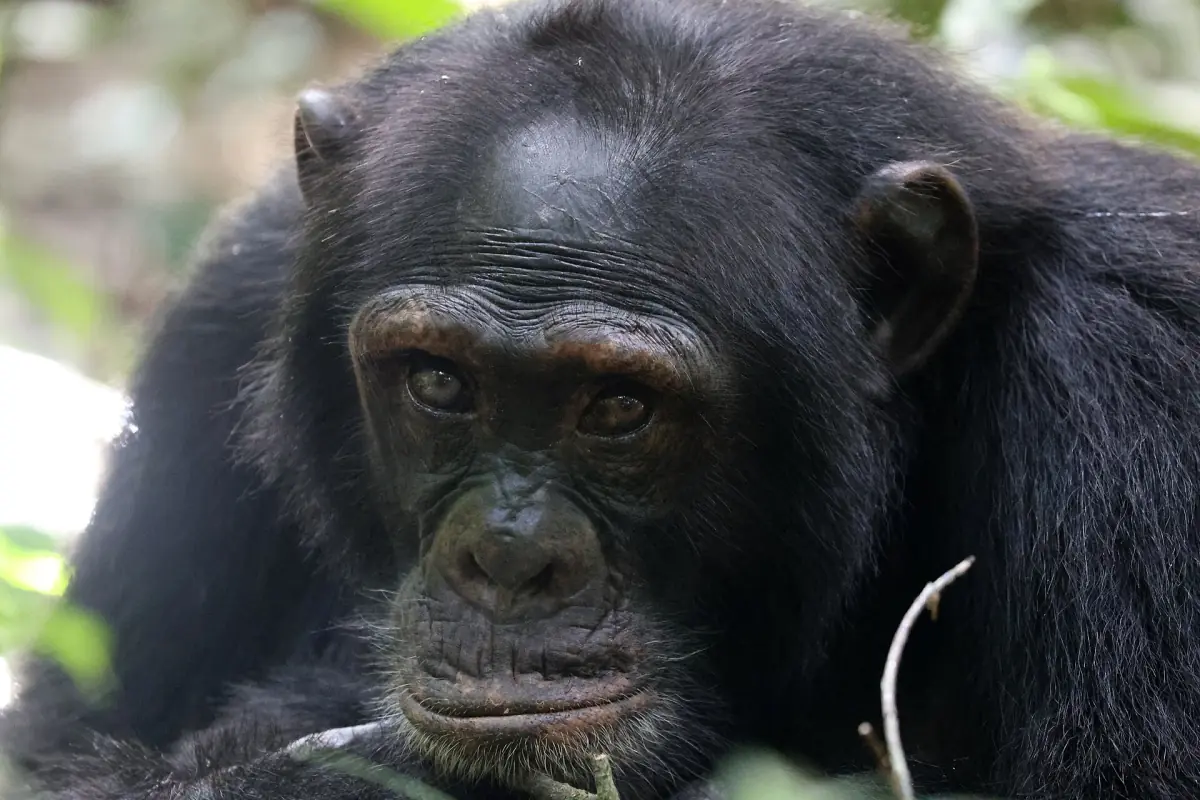
Chimpanzee facts: status, size and age
The basics about the species you meet in Kibale.
Species and status
The common chimpanzee, Pan troglodytes, is Endangered according to the IUCN. Visitor numbers on a trek are limited, and the rules for staying close to the animals are strict.
Size and lifespan
Adults stand about 3.5 to 5 feet tall (roughly 1.1 to 1.5 m). In human care they reach 50 to 60 years, and wild chimpanzees can live to around 50 years.
Tools and learned skills
Chimpanzees use sticks to get at food and stones to open hard nuts, and young animals learn these skills from others. You may not see this on any given trek, so treat it as background, not as a promise.
Social life
A community splits into changing smaller groups that move through the forest. Their food includes animal protein as well as fruit and leaves. Grooming is how they keep bonds strong.
Our pick: chimpanzee tracking
A day trip that assigns a chimpanzee family and adds birdwatching on the trail.
Hand-picked tours, booked through GetYourGuide. Prices are indicative starting prices in US dollars (as of October 2026). Tap a tour for live availability and the current price in your currency.
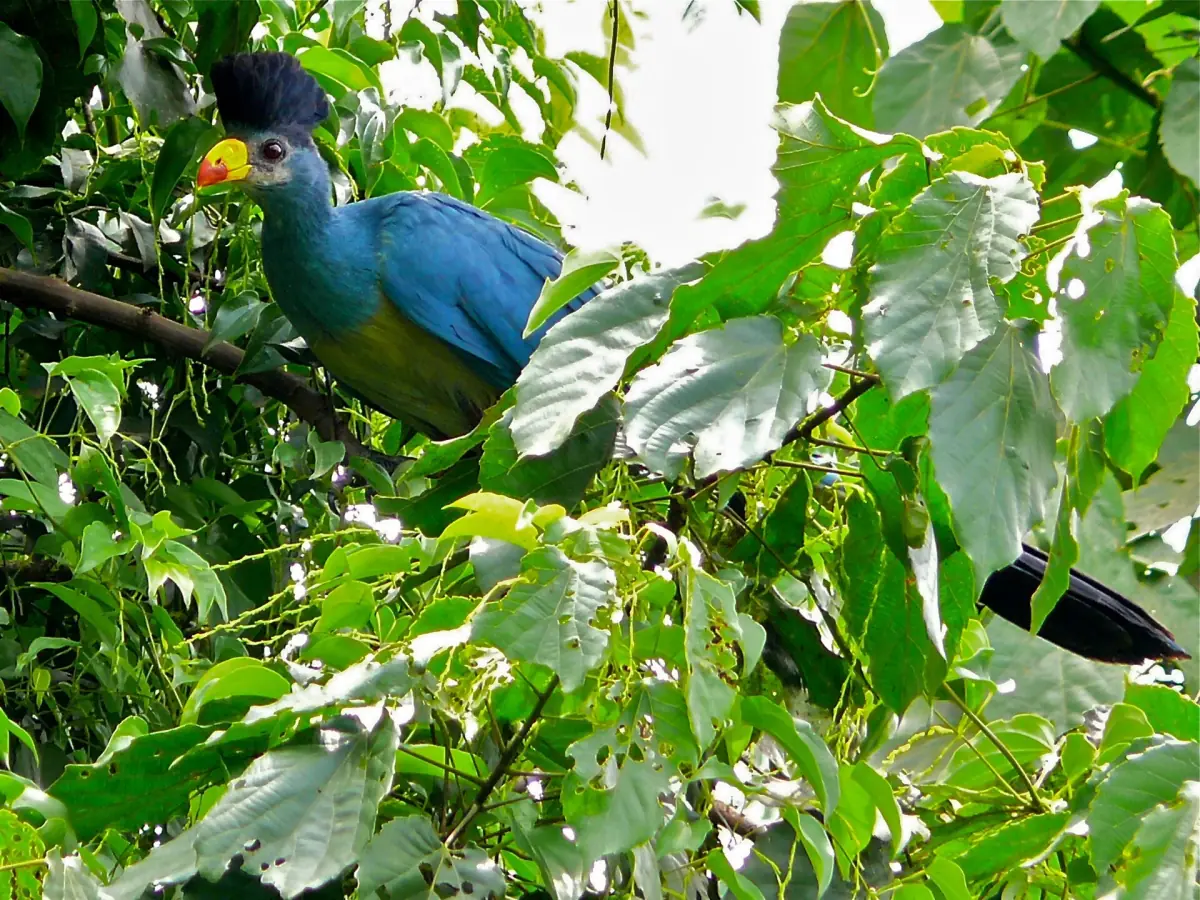
Chimpanzee trekking and Kibale tours
Guided Kibale trips and chimpanzee treks from Fort Portal and Kampala, with live prices and availability. Check what each trip includes before you book.
Chimpanzee communities and the Ngogo split
Chimpanzees in Kibale live in communities, and researchers have followed some of them for decades. At Ngogo, a research area inside the park, one community has been observed continuously since 1995. It once numbered more than 200 animals. The community began to divide around 2015, and by 2018 the split was permanent. A study of the split was published on 9 April 2026.
Ngogo is a research area, not a visitor trek. Regular tracking for visitors starts at Kanyanchu. A trek follows the animals that the rangers find on the day. The history of the research station is on our Kibale history page.
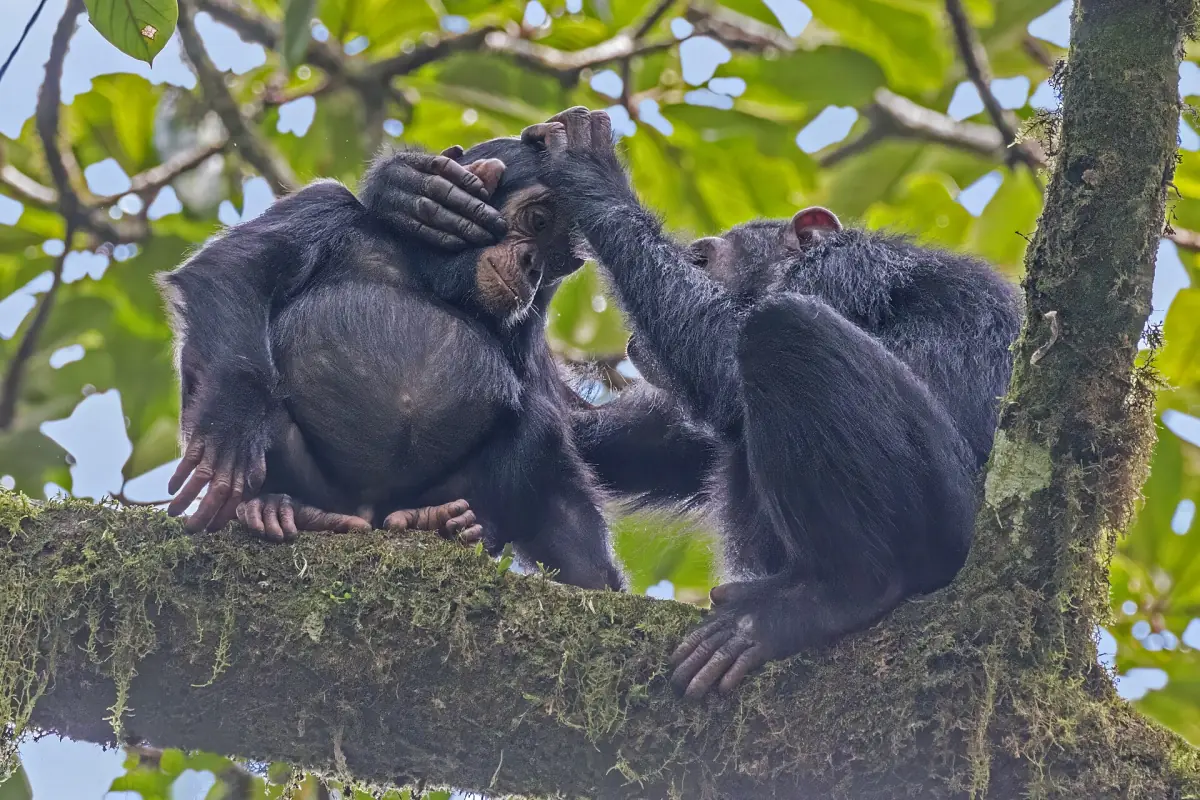
Seeing chimpanzees in Kibale
What a visit involves in 2026.
Where it starts
Treks start at the Kanyanchu visitor centre and need a booking in advance. Arrive early for registration and the briefing. The exact start time is on your permit. Slots are 8:00 and 14:00, and an 11:00 start may also be offered, so check your permit.
Group size and time
A group has up to 6 visitors with a UWA guide. Once the chimpanzees are found, you may stay up to 1 hour. The whole outing takes 2 to 5 hours. UWA gives a sighting rate of more than 90 percent, but nobody can promise a sighting on your day.
Rules around the animals
Keep at least 10 m away. Do not take part if you have an infectious illness. Do not follow the animals, imitate their calls or use flash. Take your litter with you, and do not smoke, eat or drink during the trek.
Permits and age
A permit for chimpanzee trekking costs $250 for foreign non-residents in 2026. The minimum age is 12 or 16, depending on which UWA rule applies, so ask your operator which applies. Check the current amount before you book. Tours state whether the permit and park fees are included. See chimpanzee permits for all categories.
A longer option
The habituation experience follows researchers who are getting a community used to people. Time with the animals is limited to 4 hours.
If you also want to see gorillas, they live elsewhere in Uganda. Read about mountain gorillas in Bwindi. Kyambura is another UWA entry point for chimpanzees, but it belongs to Queen Elizabeth National Park, see Kyambura Gorge.
Plan more of your Kibale visit
Where the other primates, the wetland and the weather fit.
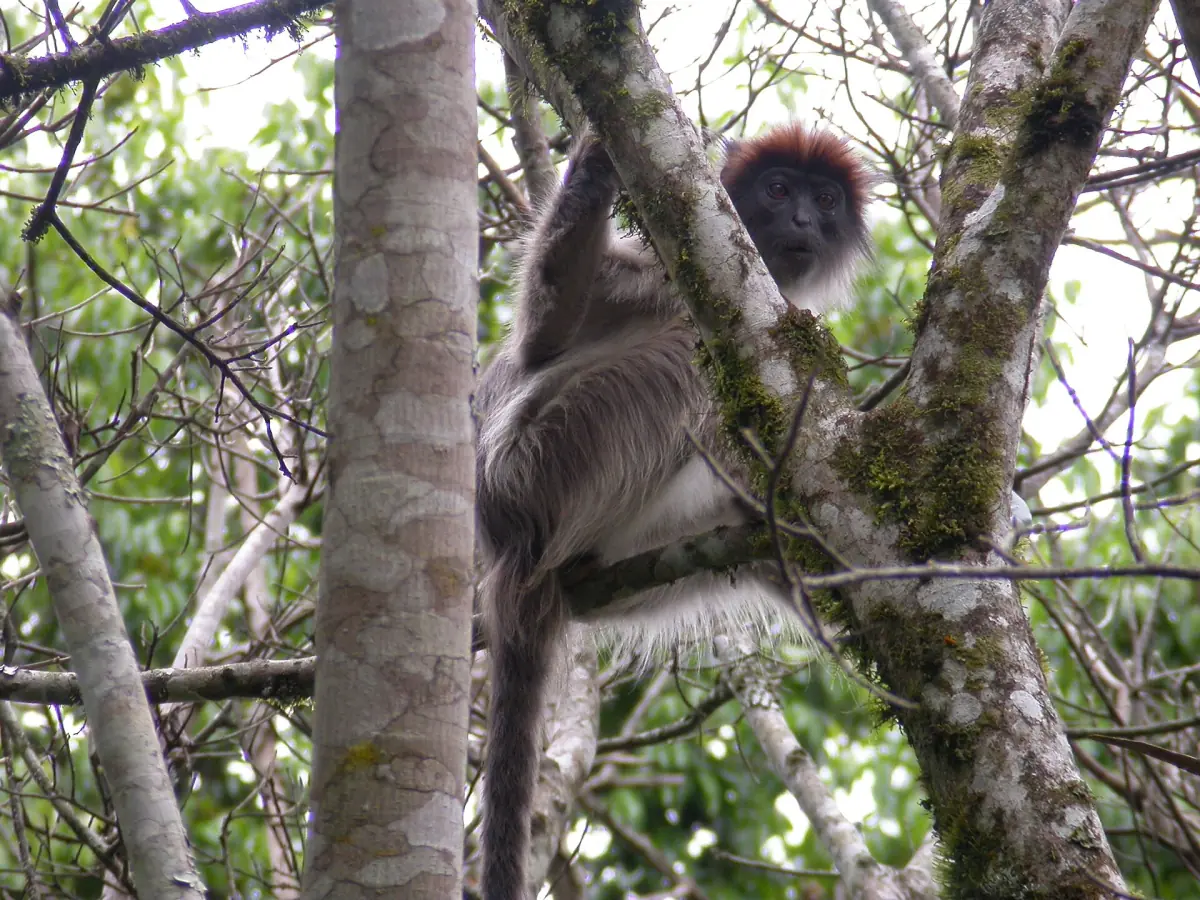
Kibale chimpanzees: frequently asked questions
How many chimpanzees live in Kibale?
An estimated 1,500 or more chimpanzees live in at least 12 communities. The number is an estimate, not a census.
Will I see chimpanzees on a trek?
Chances are good, and UWA gives a sighting rate above 90 percent. No trek can guarantee a sighting, because the animals move through the forest.
Can I visit the Ngogo research site?
Ngogo is a research area. Regular visitor tracking starts at Kanyanchu, and visits to the research station are not part of a normal trek.
How close can I get to a chimpanzee?
Keep at least 10 m away and stay no longer than 1 hour with the group. Your guide tells you when to move back.
How long do chimpanzees live?
In human care they reach 50 to 60 years, and wild chimpanzees can live to around 50 years.